

“What gets measured gets managed” is one of my least favorite sayings. It sounds so corny, but at the same time—and the reason I mention it here—is that despite its corniness, the phrase rings true. Over the last couple of years, I’ve found no better way to achieve many of my larger work and life goals than to deliberately measure my progress.
One of the best things you can do when undertaking an ambitious goal or project is to track your progress in achieving it—especially when you measure against a predetermined pace. I’ve used this strategy to track my progress and lose 20 pounds, write my last book, and even consistently meditate when I’ve fallen off the wagon.
Here’s how you do it:
- Choose a specific goal that can be measured. Some examples: lose 20 pounds, write an 80,000 word book, save $10,000, run a total of 100 miles, or meditate 15 minutes a day this month (450 minutes total).
- Pick a realistic completion date. This is key. Choosing a date by which you’d like to finish your goal will let you define the pace you’ll need in order to achieve that goal. Make sure your date is attainable and realistic.
- Use Excel or Numbers to design a simple, two-lined chart. One line tracks the pace you’ll need to follow to achieve your goal by the date you’ve specified, and the other line tracks your incremental progress towards the goal. Update this second line every week, or however often you choose. (I’m purposely not posting a template here—I have a good one, but the more involved you are in this process, the more likely you are to keep the chart updated.)
Here’s what one of these charts looks like when you’re in the process of achieving your goal:
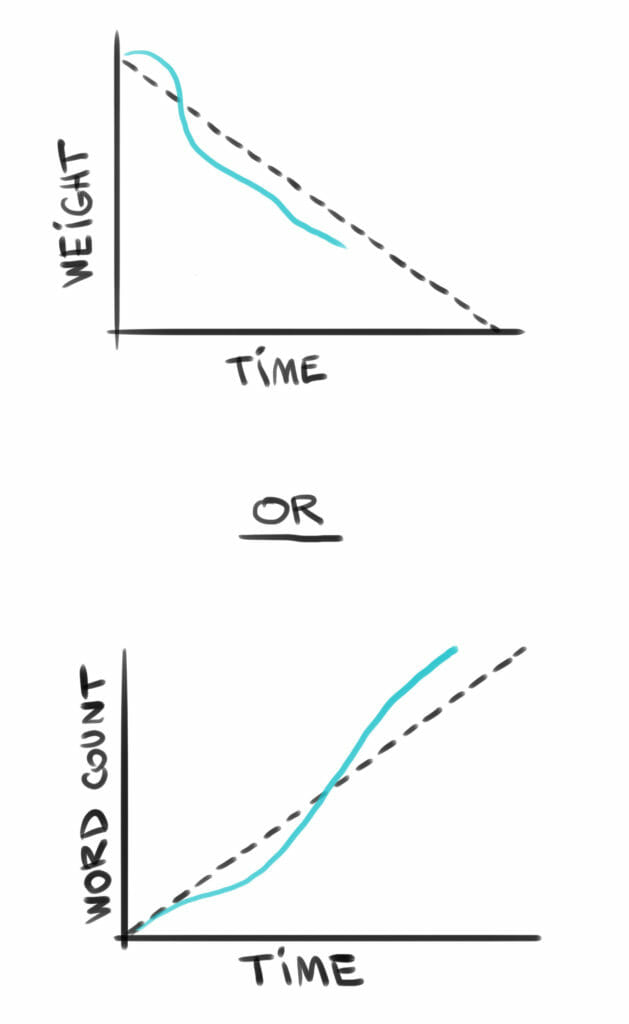
I’ve found it helps to print several of these charts and place them within sight—when writing The Productivity Project, I taped a chart of my incremental word count above the computer monitor in my office, another in the kitchen, and one in my bedroom.
I’ve found this tactic works for a few reasons:
You can make adjustments over time. This includes tweaks to your effort—to either work harder if you’re behind pace, or let up a bit if you’re ahead—as well as adjustments to the goal itself, if you’re finding that in practice, your plan is either overambitious or too conservative. (That said, sometimes conservative goals are the best ones because they feel much more attainable.)
You know when you can treat yourself. Goals are fun to make and achieve, but tracking your progress lets you know when you can let your foot off the gas a little, and treat yourself. It’s a pretty great feeling to both treat yourself, and know that you’re on pace to achieve your larger goal.
Tracking your progress against a pace keeps you honest with yourself. My negative inner dialogue goes through the roof when working towards larger goals. I have the bad habit of talking myself out of achieving larger goals (especially when food is involved). Tracking your exact progress against a planned pace gives you some cold, hard data to reflect on how well you’re doing.
When you track your progress for your larger personal and work goals—especially against a predetermined pace—you’re more likely to achieve them. I’ve yet to find a better strategy to achieving the bigger goals in my life.